

FOR ORGANIZATIONS
The Stage Manager Did It
Learn to coordinate teams through the art of stage management
For small-team leaders, coordinators and supervisors
Coordinate a short theatre scene and discover practical ways to organize people, communicate changes and keep a team moving together.
Learn coordination
through theatre.
A scene only works when people, information and timing come together. Participants take on theatre roles and work with one short excerpt from a play or musical, selected for the group’s language and context.
The stage manager coordinates the agreed production and records creative decisions. Through that role, participants practise planning, documentation and clear communication they can later adapt to their teams.
Make responsibilities clear
Understand theatre roles, agree who handles each task and turn a script into a workable rehearsal plan.
Keep information usable
Record movement, changes and follow-up needs so another person can understand what happens next.
Coordinate in real time
Practise concise calls, attentive listening and calm responses when a sequence needs to stop, change or restart.
Three sessions. One scene.
2 hours per sessionMeet the theatre team, read the excerpt and identify its people, props and technical requirements. Use worked examples and a guided demonstration to prepare a rehearsal schedule and begin the promptbook: a script annotated with movement, cues and production notes.
Output Scene breakdown, rehearsal schedule and first promptbook pages
Watch how movement is recorded and a cue is called, then rehearse the excerpt, record blocking (where performers move) and write a clear rehearsal report. Introduce simple simulated lighting, sound or scene-change cues, then try short sequences of standby and GO calls.
Output Updated promptbook, rehearsal report and draft cue list
Complete the promptbook and cue sequence, then coordinate a guided run of the scene. Use feedback to refine the work and try again. Close by identifying how the planning, reporting and communication tools can support your own team.
Output Working scene promptbook and practical workplace takeaways
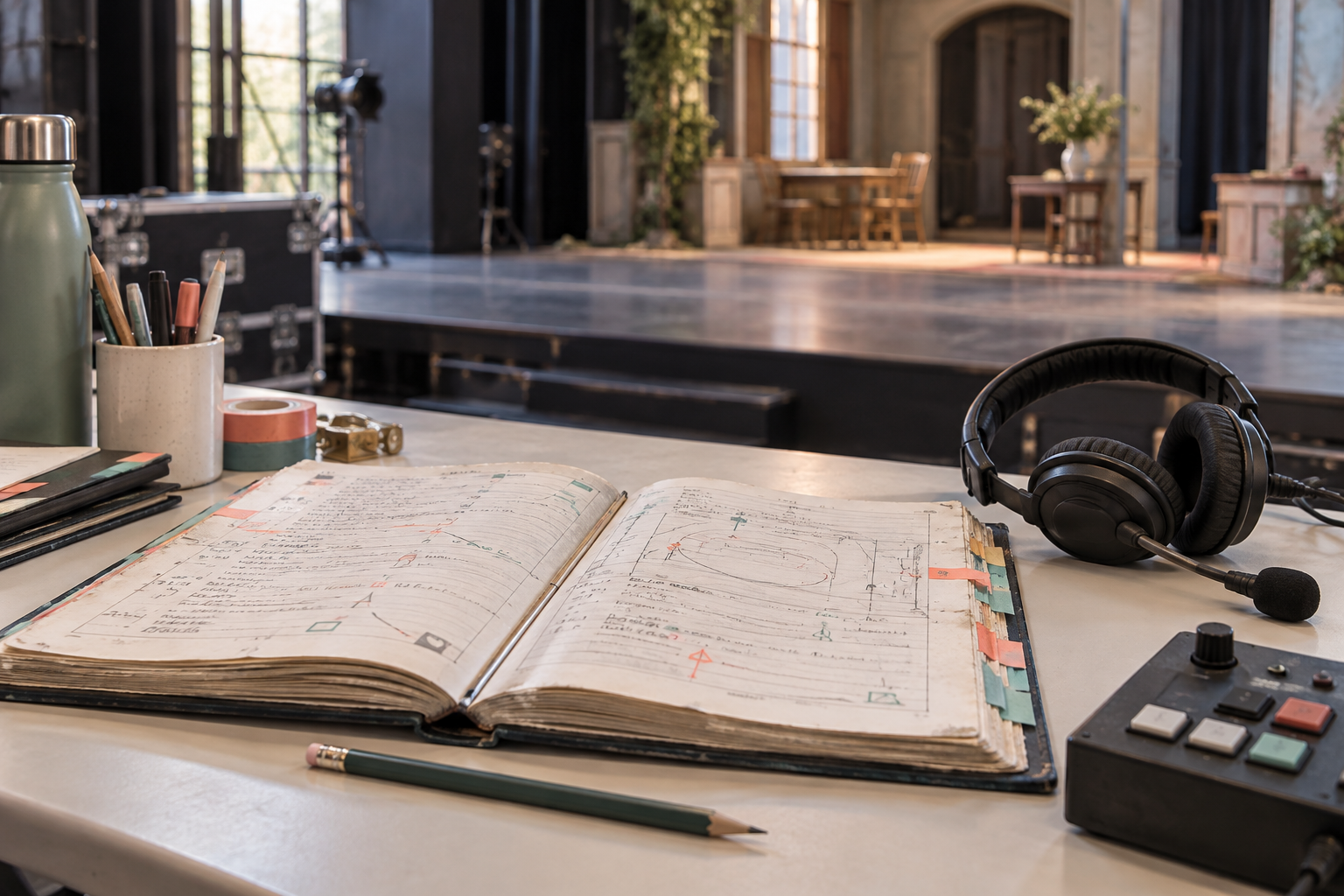
A promptbook you can use
The same excerpt carries the learning across all three sessions. The final working record brings the scene’s moving parts together.
- Script and blockingMovement, entrances, exits and production notes recorded clearly.
- Schedule, reports and cuesA rehearsal plan, actionable notes and light, sound or scene-change cues for the simulated run.
- Transfer to your workplaceIdentify where clearer responsibilities, handovers and change records could help your team.
A practical theatre workshop
3 sessions · 2 hours each
No theatre, acting or singing experience is required. Participants can read from the script; technical elements are simulated. Templates, coaching and feedback adapt to the group’s starting point as participants take more responsibility for the scene.
Discuss your teamThe excerpt, dates and delivery arrangements are agreed with your organization.